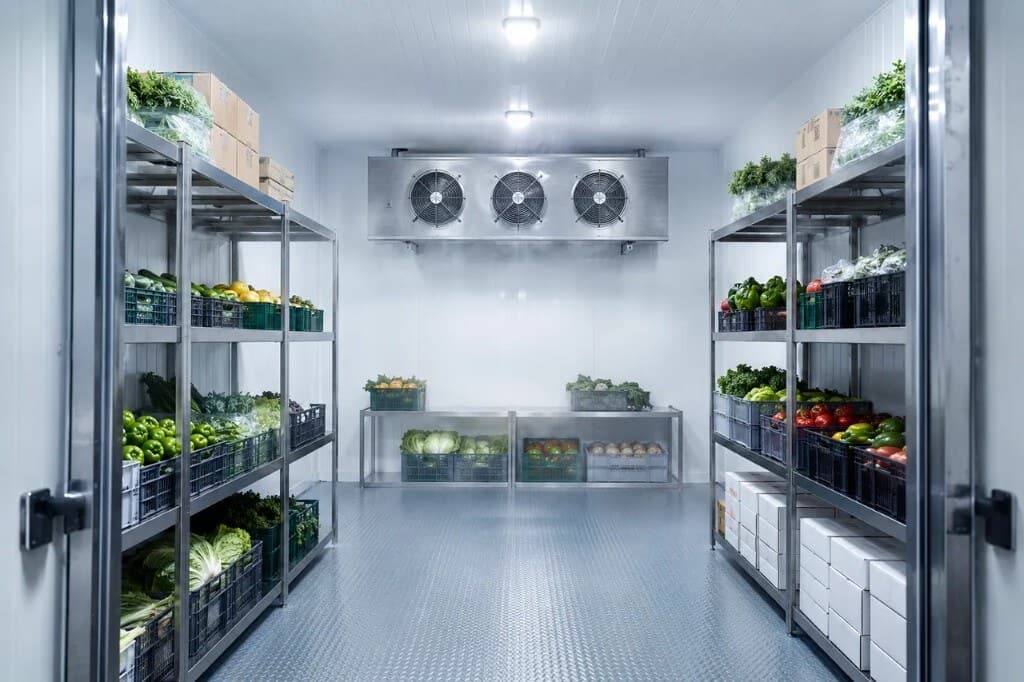
A seed or growth chamber is not merely a cold room with lights. It may require cooling, heating, humidification, dehumidification, day/night transitions, and uniform conditions across multiple shelves. Setpoints should come from the seed protocol and test standard rather than a generic recipe.
Define the purpose
Seed storage focuses on slowing deterioration under suitable temperature and moisture conditions. Germination testing prioritises repeatability. A growth chamber may add photoperiod, intensity, spectrum, and multi-stage programs. Sample count, trays, plant growth, and lighting heat are key design loads.
Variables to specify
| Variable | Required definition |
|---|---|
| Temperature | Day/night values, tolerance, and transition rate |
| Humidity | RH target, tolerance, water quality, and condensation limits |
| Light | Photoperiod, intensity, spectrum, distance, and heat |
| Air | Circulation, fresh air, CO2, and velocity over trays |
| Uniformity | Mapping points, representative load, and logging duration |
| Safety | Alarms, backup, internal release, and overflow protection |
Coupled controls
Lights, people, fans, and equipment add heat. Humidification can condense on cold surfaces, while the cooling coil removes moisture. Temperature and RH sequences must therefore coordinate instead of allowing cooling and heating to oppose each other continuously.
Trays and growing plants alter airflow. An empty chamber may map differently from loaded shelves. Define a standard loading pattern, keep discharge paths open, and place reference sensors away from jets and steam sources.
Mapping and calibration
Map temperature and RH empty and with a representative load according to risk. Include corners, centre, door area, and shelf levels. Record steady operation and program transitions, then identify usable zones. Calibrate sensors over the actual operating range and define action for out-of-tolerance results. Logging should retain setpoint, measured value, alarms, and user changes.
Repeatable operation
Standardise trays, media, watering, loading, and door-opening records. Clean trays, drains, and humidifiers to control mould. Periodically test alarms and backup arrangements. Critical protocols should include a documented sample-transfer plan for equipment failure.
Plan the project with Intercooling
This article is an initial planning guide. Final temperature, equipment capacity, and budget depend on the product, loading pattern, site, and operating method. Explore our services and cold-room systems, review representative projects, or contact the engineering team to arrange a site survey. For temperature selection, also read chill rooms, freezers, and blast freezing compared.