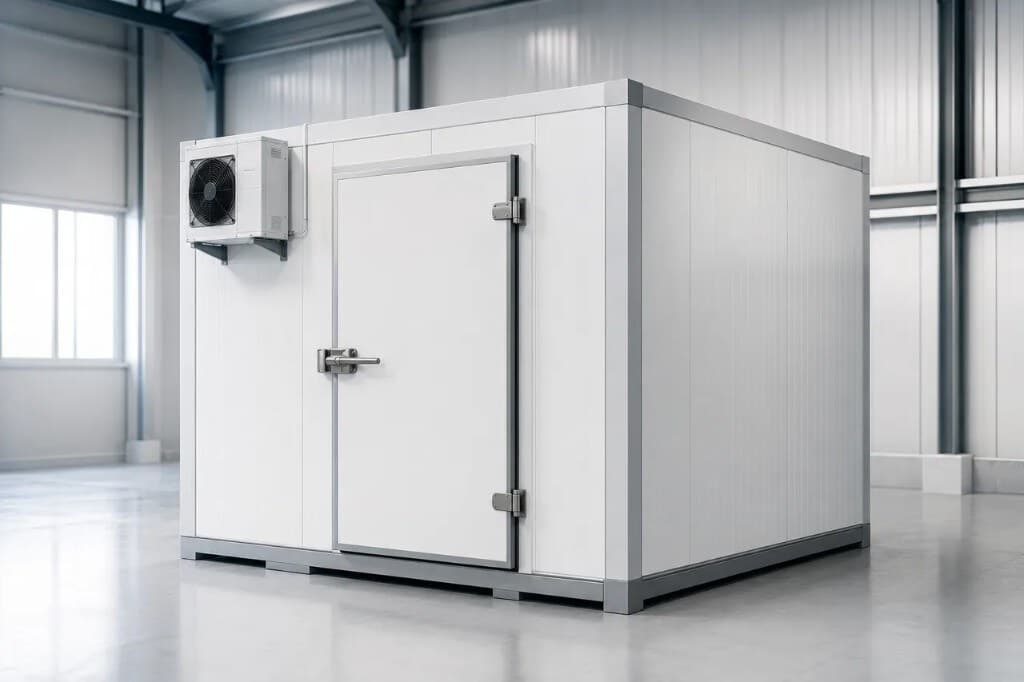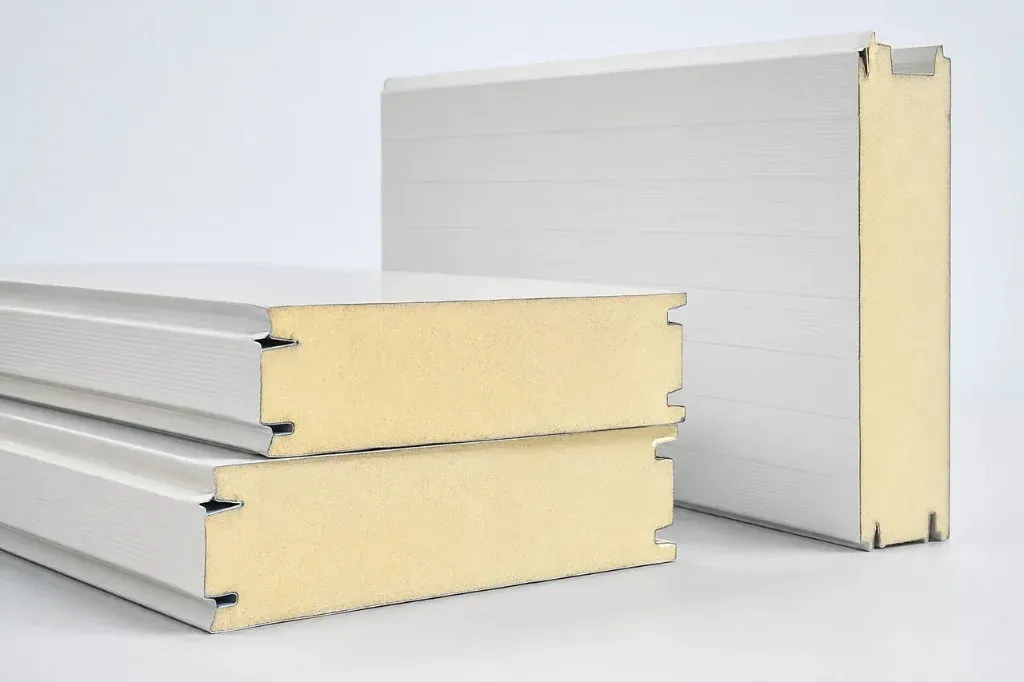
Insulated panels form both the enclosure and the heat-and-vapour control layer. Published thermal conductivity alone does not determine room performance: joints, corners, floors, doors, and site penetrations can become dominant leakage paths.
Core and facing
Common cores include PIR, PUR, EPS, and specialist materials. They differ in conductivity, tested fire behaviour, strength, moisture response, cost, and insurer acceptance. Review the declared test standard and project requirement rather than inferring safety from a material name.
Coated metal suits many general rooms. Stainless steel may be appropriate in corrosive or high-hygiene areas, but grade and cleaning chemicals must be compatible. Impact protection should carry trolley abuse instead of the thin facing.
Thickness and vapour control
Thickness depends on internal and external conditions, humidity, solar exposure, surface area, and energy target. A chiller may use less insulation than a freezer, but there is no universal value. Calculate overall U-value and assess surface condensation.
Water vapour moves from warm humid zones toward cold surfaces. Discontinuous seals can allow internal condensation, ice, swelling, and thermal degradation. The vapour line must remain continuous through joints, corners, doors, and penetrations. Steel members and fasteners bridging both faces require thermal-break detailing.
Floor and base
Verify level, load capacity, and moisture before installation. Freezers need a project-specific assessment of floor insulation, vapour control, and ground-frost heave. Floor finish must suit forklifts, washdown, chemicals, and slip risk. Drains should not become thermal or air-leak bridges.
Quality checks
- Verify panel identity, thickness, facing, and transport damage.
- Level the base and seal interfaces.
- Lock joints to the manufacturer's method without distortion.
- Seal corners and every penetration.
- Align doors and test gaskets and internal release.
- Use visual, light, smoke, or thermographic inspection as appropriate.
After handover, do not suspend loads or drill panels without reviewing structure and hidden services. Inspect seals, doors, and impact zones. Condensation should trigger investigation of leakage, thermal bridging, and ambient conditions rather than cosmetic covering.
Plan the project with Intercooling
This article is an initial planning guide. Final temperature, equipment capacity, and budget depend on the product, loading pattern, site, and operating method. Explore our services and cold-room systems, review representative projects, or contact the engineering team to arrange a site survey. For temperature selection, also read chill rooms, freezers, and blast freezing compared.