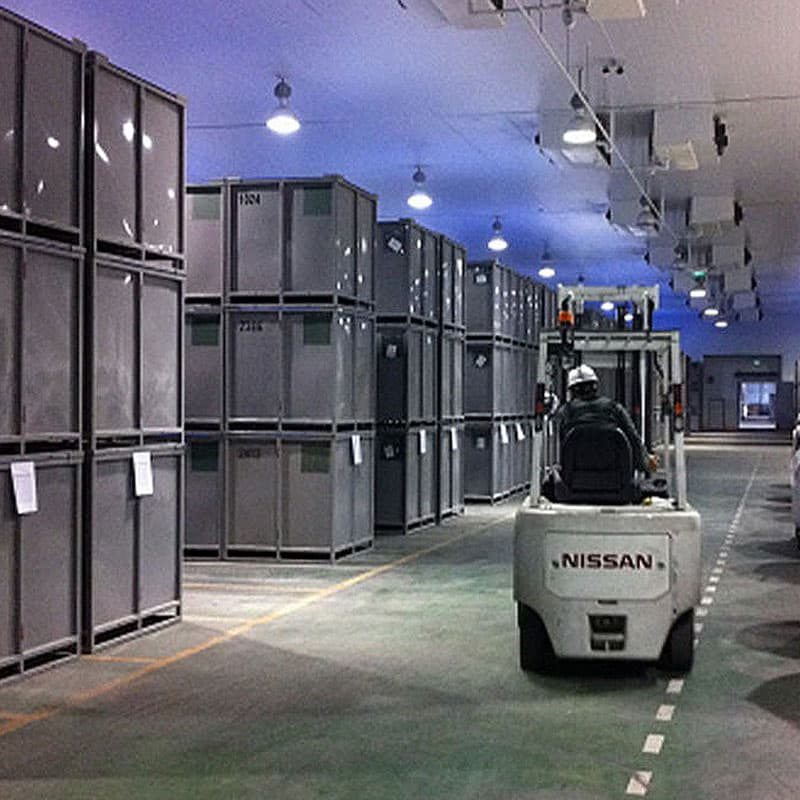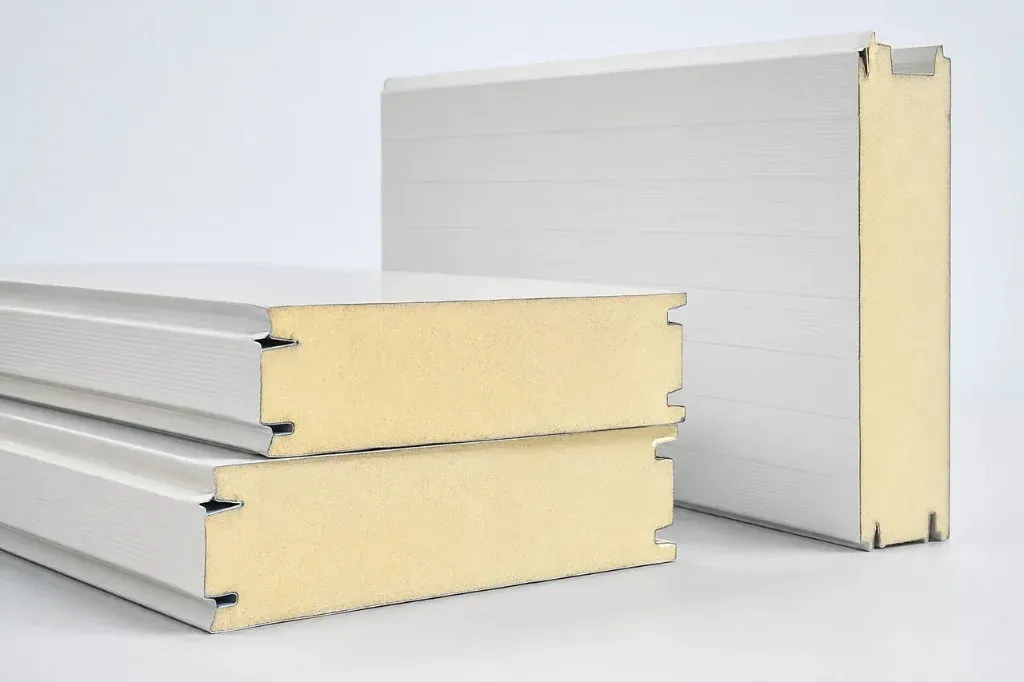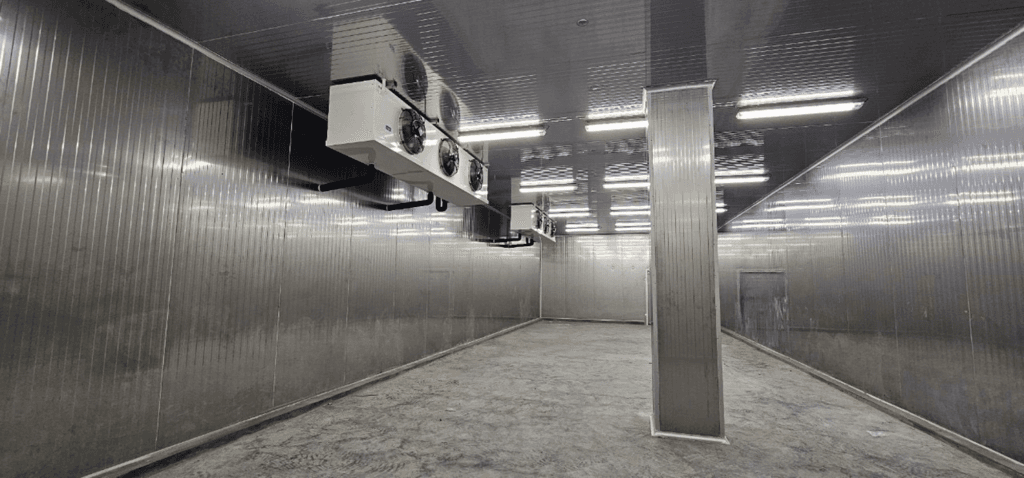
An ice room differs from a general storage freezer because the product can melt, clump, fracture, and bring water onto the floor during handling. The selected condition depends on ice type, dwell time, package, and production temperature. Running colder than necessary can add energy and operational cost without fixing handling problems.
Define the ice load
Sealed bags need shape retention and clump control. Flake or crushed ice has high surface area and gains heat quickly, while large blocks respond more slowly. Record hourly production, entry temperature, maximum inventory, dwell time, and door cycles.
Air temperatures around -5 to -15°C are used in some ice-storage applications, but this is not a universal range. Product trials and hygiene requirements should determine the final setpoint.
Refrigeration and defrost
Ice near its melting point can impose a meaningful product load during receiving. Calculations should include transmission, infiltration, lights, people, motors, and product heat. Evaporators need useful circulation without damaging bags or leaving stagnant zones.
Frost reduces airflow, so defrost type and frequency should follow actual moisture ingress. Drains and any required heaters must prevent refreezing and blockage.
Floor, doors, and safety
The floor must carry stored loads, trolley traffic, and impact while providing a cleanable, slip-resistant surface. Sub-zero rooms require assessment of floor insulation and ground-frost protection. External wash water should not flow into the room.
Doors need intact gaskets, frame heat where required, and an internal emergency release. Curtains can reduce infiltration but must remain hygienic and unobstructive. Lighting should be suitable for low temperature and protected in food areas.
Storage layout and acceptance
Maintain airflow clearances and never block evaporator intake or discharge. Use pallets or racks that do not trap water, apply stock rotation, and verify stack stability. Minimise staging time outside the room.
Commission at the agreed load and check air and sample product temperatures, recovery after door opening, defrost drainage, and alarms. Product clumping or wet bags should be correlated with time and location; lowering the setpoint alone may only mask air leakage or handling issues.
Plan the project with Intercooling
This article is an initial planning guide. Final temperature, equipment capacity, and budget depend on the product, loading pattern, site, and operating method. Explore our services and cold-room systems, review representative projects, or contact the engineering team to arrange a site survey. For temperature selection, also read chill rooms, freezers, and blast freezing compared.